
Barcode labels are widely used in manufacturing environments to support product identification and traceability. In electronics manufacturing and other high-precision industries, labels are often extremely small and must fit into very limited spaces.
While small labels can solve space constraints, they also introduce a new challenge: barcode readability. If the barcode cannot be scanned quickly and reliably, traceability systems can fail and production efficiency may suffer.
Understanding the causes of barcode readability problems helps engineers design labels that remain reliable even when space is limited.
Speak to a labelling expert at Zygology Systems on 01628 520440 or email info@zygology.co.uk.
In this guide
- Why barcode readability matters
- Common barcode readability problems
- Barcode size limitations
- Print quality and resolution
- Label materials and dimensional stability
- Scanner capability and environment
- Good barcode design practices
- Barcode labels and traceability systems
Why Barcode Readability Matters
Barcode labels are used to identify products, track production stages and store manufacturing information. When a barcode fails to scan correctly, the entire traceability system may be disrupted.
Operators may need to enter information manually or reprint labels, which slows down production and increases the risk of human error.
In industries such as electronics manufacturing, barcode labels are often scanned many times throughout the production process. Reliable readability is therefore essential.
When labels are very small, however, achieving reliable scanning becomes more difficult.
Common Barcode Readability Problems
Several issues can cause barcode labels to become difficult or impossible to scan.
Common problems include:
- barcode elements printed too small
- insufficient contrast between the barcode and background
- distortion caused by heat or chemicals
- poor print quality
- insufficient quiet zone around the barcode
Many of these issues occur when labels are designed without considering the limitations of printing technology and scanners.
Small labels are particularly vulnerable to these problems because the barcode elements themselves must also be small.
Barcode Size Limitations
The size of a barcode has a direct impact on scanning reliability. Each barcode consists of individual elements that must be large enough for scanners to distinguish clearly.
If these elements become too small, scanners may struggle to detect the pattern.
This problem often occurs when engineers attempt to fit too much information into a very small label.
Two-dimensional symbols such as QR codes and data matrix codes are often used instead of traditional barcodes because they can store more information in a smaller space.
Our guide to how small a QR code label can be explains how code size influences scanning reliability.
Print Quality and Resolution
Print quality plays a critical role in barcode readability.
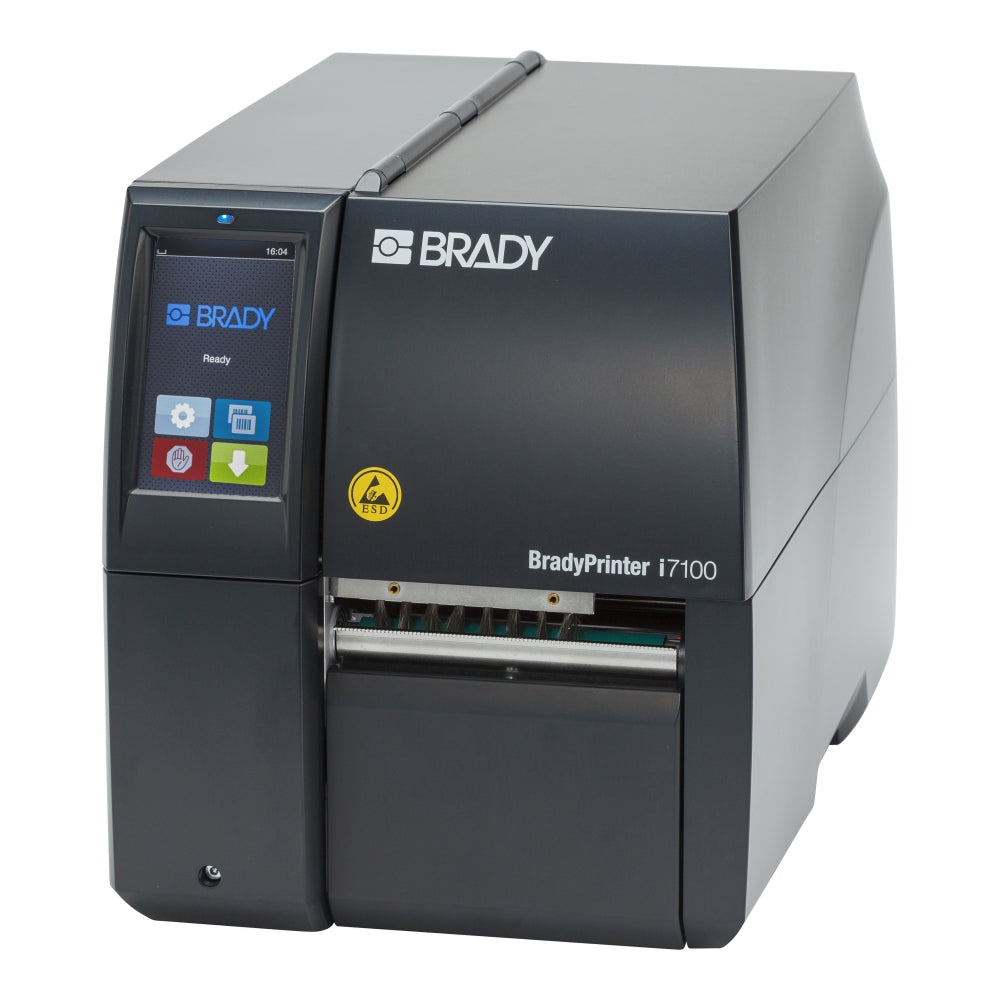
Thermal transfer printers used in industrial environments typically operate at resolutions such as 300 dpi or 600 dpi. Higher resolution printers can produce smaller barcode elements with greater accuracy.
However, print quality also depends on other factors including:
- the ribbon used during printing
- printer calibration
- label material surface characteristics
Using the correct ribbon and printer settings is essential when producing small barcode labels.
Speak to a labelling expert at Zygology Systems on 01628 520440 or email info@zygology.co.uk.
Label Materials and Dimensional Stability
The material used for the label also affects barcode readability.
If the material shrinks, stretches or distorts during manufacturing, the barcode pattern may change slightly. Even small distortions can prevent scanners from reading the code.
This is particularly important for electronics manufacturing where circuit boards may pass through high-temperature processes such as soldering.
Materials such as polyimide labels are commonly used in these environments because they maintain dimensional stability at high temperatures.
Our guide to labels that survive the soldering process explains why high-temperature materials are often required for PCB identification labels.
Scanner Capability and Environment
The performance of the scanning equipment also influences barcode readability.
Industrial scanners are generally capable of reading smaller codes than consumer devices, but they still have limits.
Scanning reliability can also be affected by environmental factors such as:
- lighting conditions
- label surface reflections
- distance between the scanner and label
When designing small labels, engineers should ensure that the barcode size remains compatible with the scanners used in the production environment.
Good Barcode Design Practices
Designing reliable barcode labels requires balancing several factors.
Key best practices include:
- ensuring barcode elements are large enough to scan reliably
- providing sufficient quiet zone around the barcode
- using high-resolution printing when necessary
- selecting label materials that remain stable during manufacturing
Following these guidelines helps ensure that barcode labels remain readable throughout the product lifecycle.
Barcode Labels and Traceability Systems
Barcode labels are a key component of modern traceability systems.
Scanning a barcode allows manufacturers to connect a product with production data such as batch numbers, test results and manufacturing history.
If barcode labels become unreadable, this traceability can be lost.
Our guide to how to specify labels for electronics manufacturing explains how label design affects long-term traceability.
Need Help Designing Reliable Barcode Labels?
Barcode readability problems can often be solved by selecting the right label materials, printing methods and barcode design.
Speak to a labelling expert at Zygology Systems today:
Call 01628 520440
Email info@zygology.co.uk
Zygology Systems supplies high quality custom labels made in the UK for demanding industrial environments including PCB identification and traceability labels.