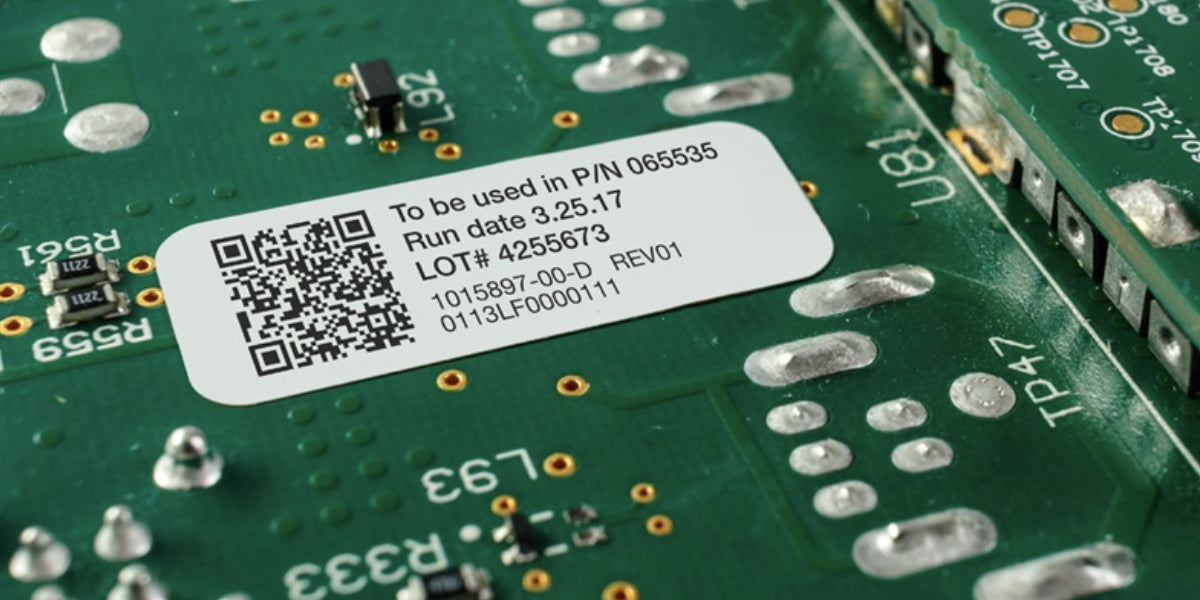
Reliable product identification is essential in electronics manufacturing. Circuit boards must often carry permanent labels containing serial numbers, part numbers, barcodes or QR codes to support traceability throughout production and the product lifecycle.
However, many manufacturers experience problems with PCB labels failing during production. Labels may peel, discolour, shrink or become unreadable during processes such as soldering, cleaning or handling. When this happens, traceability can be compromised and production delays may occur while boards are manually identified.
Understanding why PCB labels fail is the first step toward choosing a label that will perform reliably in electronics manufacturing environments.
Speak to a labelling expert at Zygology Systems on 01628 520440 or email info@zygology.co.uk.
In this guide
- The challenges of PCB labelling
- Labels cannot withstand soldering temperatures
- Adhesives fail during cleaning processes
- Print becomes unreadable
- Labels and the problem of limited PCB space
- Barcode and QR code traceability
- Label placement on circuit boards
- Static risks in electronics manufacturing
- Why off-the-shelf labels often fail
- Choosing the right PCB label
The Challenges of PCB Labelling
Circuit board labels are exposed to harsh conditions during electronics manufacturing. Unlike many general-purpose labels, PCB labels must survive processes that involve extreme temperatures, chemical exposure and mechanical handling.
Typical challenges include:
- High temperatures during soldering processes
- Exposure to flux and cleaning solvents
- Abrasion during assembly and handling
- Extremely limited space for identification labels
- Long-term traceability requirements
Many standard labels simply are not designed to withstand these environments. As a result, labels that appear suitable at first may begin to fail once production starts.
Labels Cannot Withstand Soldering Temperatures
One of the most common reasons for PCB label failure is exposure to high temperatures during soldering.
Processes such as wave soldering or reflow soldering can expose circuit boards to temperatures exceeding 200°C. Labels made from standard materials may shrink, discolour or lose adhesive strength when exposed to these temperatures.
Materials specifically designed for high-temperature environments are usually required. In many electronics manufacturing applications, polyimide labels are used because they can tolerate extreme heat while maintaining dimensional stability.
You can also read more in our guide to labels that survive the soldering process.
Adhesives Fail During Cleaning Processes
Electronics manufacturing often involves cleaning processes to remove flux residues and contaminants from circuit boards.
These processes may use:
- Solvents
- Chemical cleaning agents
- Ultrasonic cleaning systems
If the adhesive used on a label is not designed for these conditions, the label may begin to lift at the edges or detach completely.
High-performance adhesives designed for electronics manufacturing environments are essential to ensure the label remains securely attached throughout production.
The correct label material and adhesive can make a significant difference. Speak to a labelling expert at Zygology Systems on 01628 520440 or email info@zygology.co.uk.
Print Becomes Unreadable
Another common issue is print durability. If labels are printed using unsuitable materials or printing methods, the information on the label may fade, smear or become unreadable.
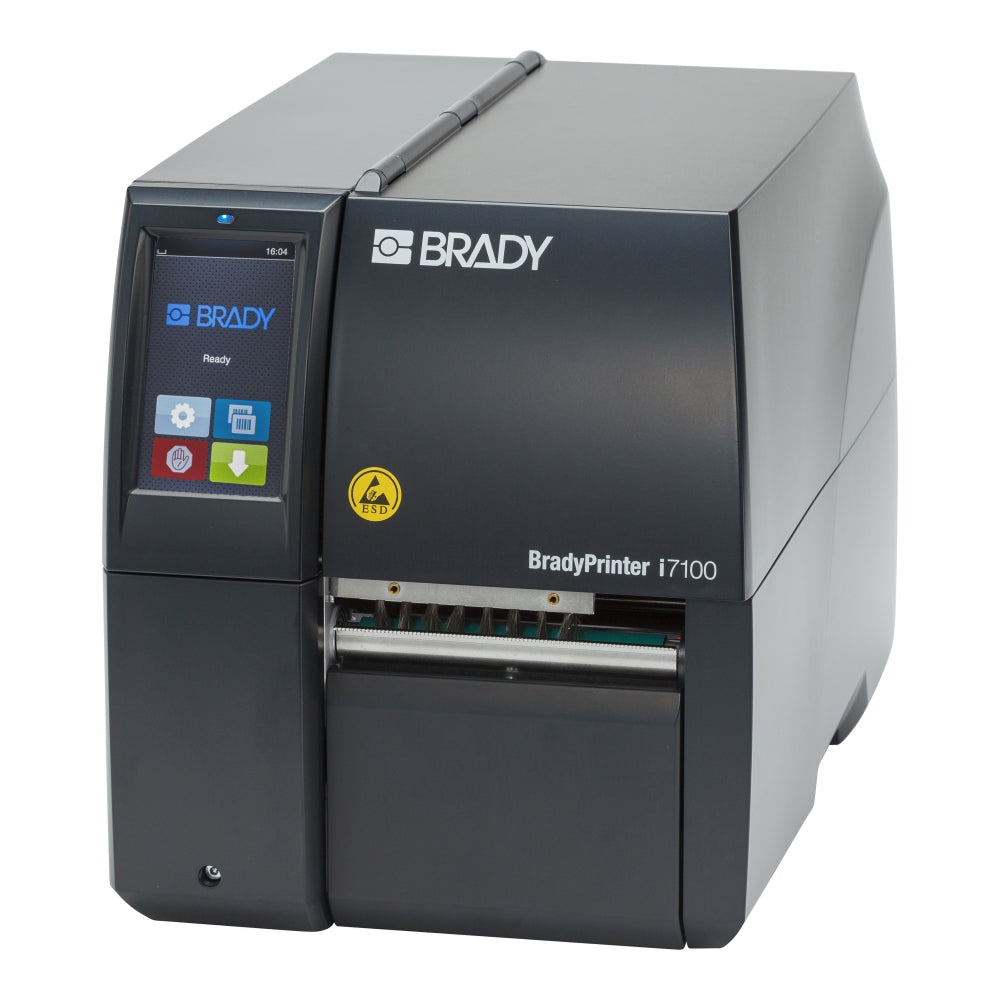
For PCB identification labels, thermal transfer printing using resin ribbons is typically recommended because it produces highly durable print that resists heat, chemicals and abrasion.
If you are comparing printing technologies, our guide to thermal transfer vs direct thermal labels explains the differences in durability.
Labels and the Problem of Limited PCB Space
Modern electronics products are becoming increasingly compact. As a result, PCB labels often need to be extremely small while still containing essential traceability information.
It is common for PCB labels to measure only a few millimetres across while still needing to contain serial numbers, product identifiers and machine-readable codes.
Designing reliable micro barcode labels requires careful attention to print resolution, barcode size and scanner compatibility.
We explore this topic further in our guide to how small a QR code label can be.
Barcode and QR Code Traceability
Many electronics manufacturers now use 2D barcodes such as QR codes or data matrix codes to improve traceability.
These codes allow large amounts of information to be stored in a very small space and scanned quickly during production or servicing.
Poorly designed labels can result in codes that scanners struggle to read, causing delays in manufacturing environments. Our guide to barcode readability problems in small labels explains some of the most common issues.
Label Placement on Circuit Boards
Another factor influencing label reliability is where the label is positioned on the circuit board.
During manufacturing, different areas of a PCB may experience different levels of heat exposure, airflow and flux residue.
Where possible manufacturers should consider:
- placing labels away from solder joints and heat sources
- avoiding areas heavily exposed to flux
- ensuring labels do not interfere with component placement
- allowing sufficient flat surface area for reliable adhesion
Careful label placement can significantly improve label durability and barcode readability.
Static Risks in Electronics Manufacturing
Electronics manufacturing environments must also manage the risk of electrostatic discharge (ESD). Certain label materials can accumulate static electricity which may damage sensitive electronic components.
In these situations manufacturers may specify ESD safe label materials designed to minimise static build-up.
Why Off-the-Shelf Labels Often Fail
Standard catalogue labels are usually designed for general identification tasks rather than specialised manufacturing environments.
In electronics production labels often need to meet requirements including:
- high temperature resistance
- chemical resistance
- extremely small sizes
- durable barcode printing
- long-term traceability
Because of these factors many manufacturers choose custom labels designed specifically for their production environment.
We look at this in more detail in our guide to why off-the-shelf labels fail in electronics production.
Choosing the Right PCB Label
Selecting the correct PCB label typically involves considering:
- maximum temperature exposure
- available label size on the PCB
- barcode or QR code requirements
- chemical exposure during cleaning
- static sensitivity
- expected product lifespan
Our guide to how to specify labels for electronics manufacturing explains these considerations in more detail.
Need Help Choosing PCB Labels?
PCB labels must survive some of the most demanding conditions found in manufacturing environments. Selecting the correct material, adhesive and printing method is essential for reliable traceability.
Speak to a labelling expert at Zygology Systems today:
Call 01628 520440
Email info@zygology.co.uk
Zygology Systems supplies high quality custom labels made in the UK and tailored to demanding industrial applications including PCB identification labels, high-temperature polyimide labels and micro QR code labels.