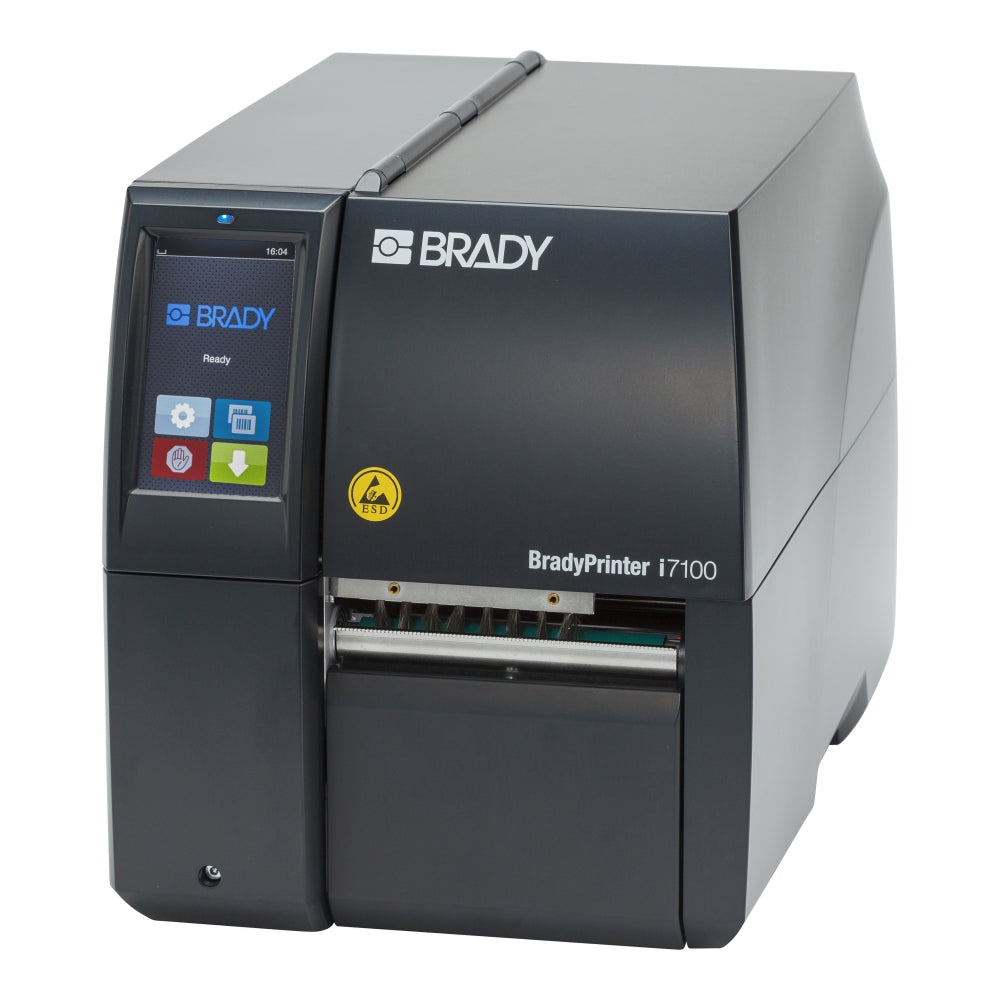

Thermal printing is widely used for producing industrial labels, barcode labels and traceability labels. Two of the most common printing methods are thermal transfer printing and direct thermal printing.
Although both technologies use heat to create images on labels, they work in different ways and are suited to different applications. Choosing the correct printing method is important when labels must remain readable throughout manufacturing processes and long-term product use.
Understanding the differences between thermal transfer and direct thermal printing helps manufacturers select the most suitable solution for their labelling requirements.
Speak to a labelling expert at Zygology Systems on 01628 520440 or email info@zygology.co.uk.
In this guide
- How thermal printing works
- What direct thermal printing is
- What thermal transfer printing is
- Durability and environmental resistance
- Printing methods for industrial labels
- Barcode quality and readability
- Choosing the correct printing method
- Printing methods and traceability systems
How Thermal Printing Works
Thermal printing technologies use heat to create images on labels. A thermal print head applies controlled heat to the label surface while the label moves through the printer.
Depending on the printing method used, the heat either activates a heat-sensitive coating on the label or transfers ink from a ribbon onto the label surface.
This process allows thermal printers to produce high-resolution barcodes and text quickly and reliably.
Thermal printing is widely used for logistics labels, product identification labels and industrial traceability labels.
What Direct Thermal Printing Is
Direct thermal printing works by applying heat directly to specially coated labels. The heat activates a chemical coating on the label surface which darkens to create the printed image.
This process does not require a ribbon, making direct thermal printers relatively simple to operate.
Direct thermal labels are commonly used for short-term applications such as shipping labels, receipts and logistics labels.
However, the printed image can fade over time, particularly when exposed to heat, light or chemicals.
For this reason, direct thermal labels are generally not used for applications where long-term durability is required.
What Thermal Transfer Printing Is
Thermal transfer printing uses a different process. Instead of printing directly onto the label surface, the printer uses a ribbon coated with ink.
The thermal print head applies heat to the ribbon, transferring ink onto the label material.
This method allows very durable images to be printed onto a wide range of materials including polyester and polyimide films.
Thermal transfer printing is widely used for industrial labels because the printed image is more resistant to heat, chemicals and abrasion.
These properties make thermal transfer printing suitable for demanding environments such as electronics manufacturing.
Speak to a labelling expert at Zygology Systems on 01628 520440 or email info@zygology.co.uk.
Durability and Environmental Resistance
The durability of printed labels is one of the most important factors when selecting a printing method.
Direct thermal printing produces images that can gradually fade or darken when exposed to environmental conditions such as heat or sunlight.
Thermal transfer printing produces much more durable images because the ink is bonded to the label surface.
When combined with durable materials such as polyimide labels, thermal transfer printing can produce labels capable of surviving demanding industrial processes.
This durability is particularly important for labels used on printed circuit boards or equipment that must remain identifiable for many years.
Printing Methods for Industrial Labels
Industrial labels often need to withstand conditions such as high temperatures, chemicals and abrasion.
These conditions are commonly encountered in environments such as electronics manufacturing where circuit boards pass through soldering processes.
Our guide to labels that survive the soldering process explains why high-temperature label materials and durable printing methods are required.
Thermal transfer printing is typically the preferred choice for these applications because it produces long-lasting barcode labels.
Barcode Quality and Readability
Barcode readability depends heavily on print quality.
Thermal transfer printing produces sharp, high-contrast images that are well suited to barcode printing.
This is particularly important when printing small barcodes or QR codes used for traceability.
Our guides to how small QR code labels can be and barcode readability problems in small labels explain how print quality influences scanning reliability.
Using the correct printing method helps ensure that barcodes remain readable throughout the manufacturing process.
Choosing the Correct Printing Method
Selecting between direct thermal and thermal transfer printing depends on several factors.
Key considerations include:
- required label lifespan
- environmental exposure
- label material
- barcode durability requirements
Direct thermal printing is suitable for short-term applications where labels do not need to remain readable for long periods.
Thermal transfer printing is generally preferred for industrial labels that must remain readable throughout manufacturing and long-term product use.
Printing Methods and Traceability Systems
Traceability systems rely on barcode labels remaining readable throughout the production process and beyond.
If a barcode fades or becomes damaged, the product may become difficult to identify.
This is why durable printing methods are essential when implementing traceability systems.
Our guide to QR code traceability in electronics manufacturing explains how these labels are used to track products throughout their lifecycle.
Choosing the correct printing technology helps ensure that traceability systems remain reliable.
Need Help Choosing the Right Printing Method?
Selecting the correct printing technology is essential for producing durable industrial labels.
Speak to a labelling expert at Zygology Systems today:
Call 01628 520440
Email info@zygology.co.uk
Zygology Systems supplies high quality custom labels made in the UK for demanding industrial applications including PCB identification and traceability labels.