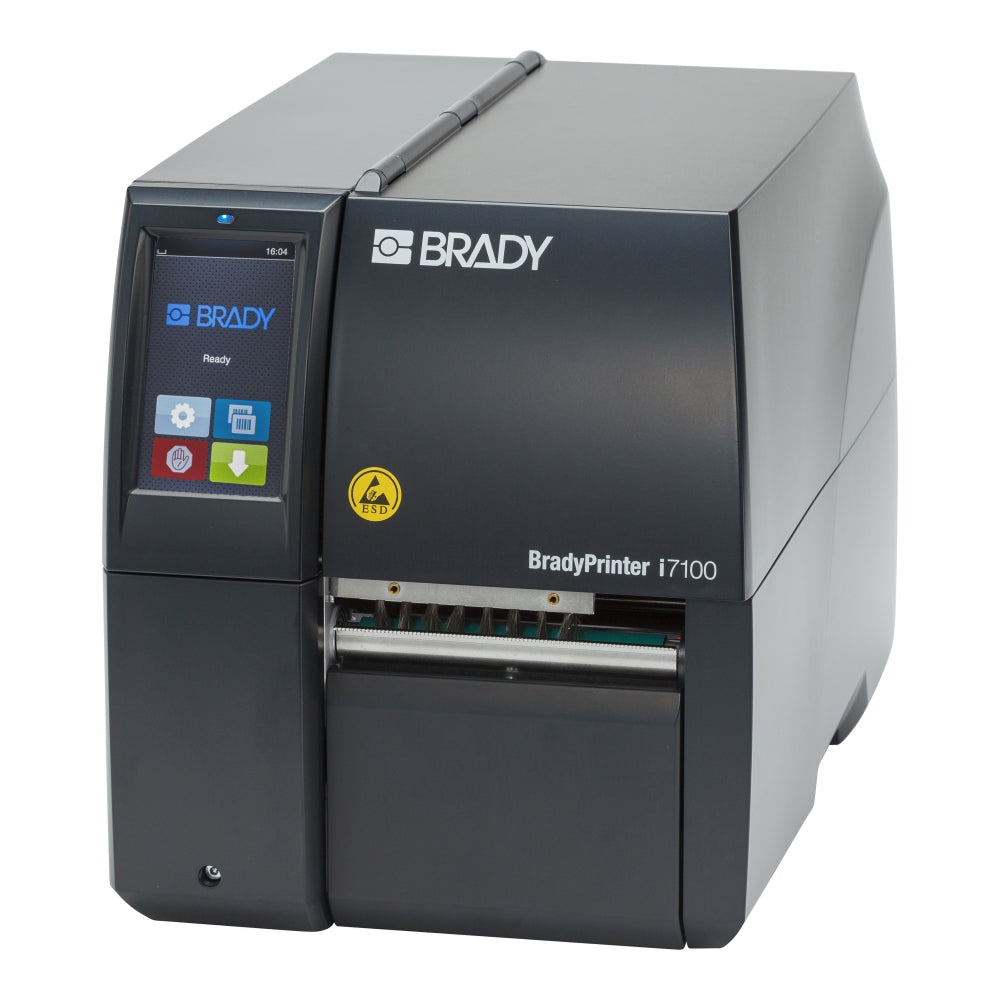
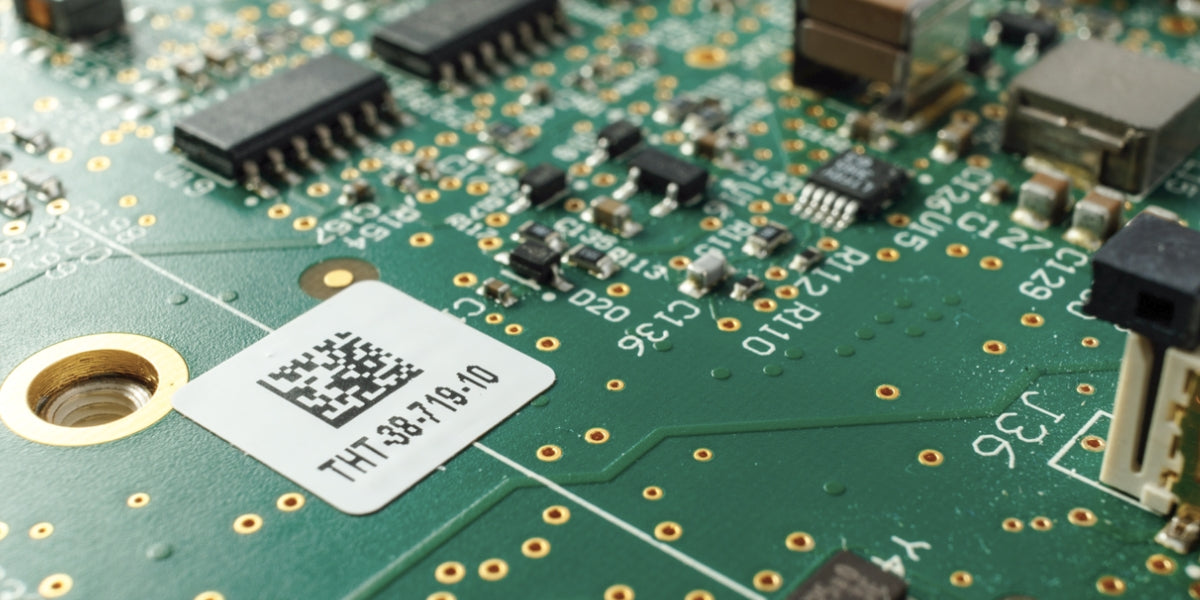
Electronics manufacturing environments place demanding requirements on product identification labels. Circuit boards and electronic assemblies often require durable labels that remain readable throughout production and the product’s operational life.
Two materials commonly used for durable industrial labels are polyester and polyimide. While both materials offer excellent durability compared with paper labels, they are designed for different types of environments.
Understanding the differences between these materials helps engineers and manufacturers select the most appropriate label for their application.
Speak to a labelling expert at Zygology Systems on 01628 520440 or email info@zygology.co.uk.
In this guide
- Common label materials in electronics manufacturing
- What polyester labels are
- What polyimide labels are
- Temperature resistance comparison
- Adhesive considerations
- Barcode and traceability requirements
- Typical applications for each material
- Choosing the right label material
Common Label Materials in Electronics Manufacturing
Electronics manufacturers typically avoid paper labels when traceability is required. Instead, they use synthetic films designed for durability and resistance to heat, chemicals and abrasion.
Two of the most widely used materials are polyester and polyimide. Both are plastic films capable of producing durable identification labels when combined with suitable adhesives and printing methods.
The key difference between them is their performance at elevated temperatures.
What Polyester Labels Are
Polyester is a widely used synthetic film known for its strength, chemical resistance and dimensional stability. Polyester labels are commonly used for durable industrial identification such as asset labels, rating plates and equipment identification.
Polyester labels offer several advantages:
- good resistance to moisture and chemicals
- excellent print quality
- high tear resistance
- long-term durability in general industrial environments
For many applications that do not involve extreme temperatures, polyester labels are a reliable and cost-effective choice.
What Polyimide Labels Are
Polyimide labels are designed specifically for high-temperature environments. The material is widely used in electronics manufacturing because it can withstand the temperatures involved in soldering processes.
Polyimide films offer excellent thermal stability and dimensional stability, making them particularly suitable for printed circuit board identification labels.
Our guide to polyimide labels for electronics manufacturing explains why this material is commonly used for PCB traceability.
Temperature Resistance Comparison
The most significant difference between polyester and polyimide labels is temperature resistance.
Electronics manufacturing processes such as reflow soldering may expose PCBs to temperatures above 200°C. Polyester materials are not typically designed for these conditions and may distort or lose adhesive strength.
Polyimide labels, by contrast, are engineered to tolerate these temperatures while maintaining dimensional stability.
For applications that involve soldering processes, polyimide is usually the preferred material.
See our guide to labels that survive the soldering process for a deeper explanation of high-temperature labelling.
Adhesive Considerations
Regardless of the face material used, the adhesive must also be suitable for the environment.
An adhesive that softens or degrades during manufacturing can cause labels to lift or detach. In electronics manufacturing, adhesives may need to tolerate:
- high temperatures
- cleaning chemicals
- mechanical handling
For PCB labels, adhesives designed specifically for high-temperature applications are often required.
Speak to a labelling expert at Zygology Systems on 01628 520440 or email info@zygology.co.uk.
Barcode and Traceability Requirements
Many PCB labels contain barcodes or QR codes used for product traceability.
For these labels to function reliably, the material must remain dimensionally stable during manufacturing. Even slight shrinkage can distort the barcode pattern and cause scanning problems.
Our guide to barcode readability problems in small labels explains some of the issues that can occur when labels are exposed to heat.
Typical Applications for Each Material
Although both materials are durable, they are typically used for different applications.
Polyester labels are commonly used for:
- asset identification labels
- equipment labels
- industrial rating plates
- durable product labels
Polyimide labels are commonly used for:
- PCB identification labels
- electronics traceability labels
- high-temperature manufacturing processes
- small barcode labels on circuit boards
Choosing the Right Label Material
Choosing the correct label material requires understanding the conditions the label will experience during manufacturing and throughout the product lifecycle.
Key considerations include:
- maximum temperature exposure
- chemical exposure during cleaning
- label size and barcode requirements
- expected lifespan of the label
Our guide to how to specify labels for electronics manufacturing explains how these factors influence label selection.
Need Help Choosing the Right Label Material?
Selecting the correct material is essential for reliable traceability in electronics manufacturing.
Speak to a labelling expert at Zygology Systems today:
Call 01628 520440
Email info@zygology.co.uk
Zygology Systems supplies high quality custom labels made in the UK and tailored to demanding industrial applications.